
Pilanesberg National Park Guide — Everything You Need to Know
Pilanesberg National Park is a malaria-free Big Five game reserve in South Africa’s North West Province, set within the ancient crater of a 1.3-billion-year-old alkaline ring complex — one of the world’s best-preserved such geological formations. Covering 55,000 hectares and located just two hours’ drive from Johannesburg, it is the fourth-largest national park in South Africa and one of the most accessible Big Five destinations on the continent.
Key Takeaways
- Pilanesberg covers 55,000 hectares and is situated inside a 1.3-billion-year-old volcanic ring structure — a landscape unlike any other African game reserve.
- The park is completely malaria-free, making it ideal for families, travellers with health sensitivities, and young children.
- Operation Genesis (1979) relocated more than 6,000 animals from 25+ species to establish the reserve — one of the largest wildlife translocations in history.
- Pilanesberg holds the Big Five: lion, leopard, elephant, rhino (both white and black), and buffalo — along with cheetah, wild dog, and over 360 bird species.
- The reserve is two hours from Johannesburg and sits on the doorstep of Sun City, making it the most convenient Big Five safari from South Africa’s major gateway city.
- Both self-drive and guided safari options are available, with accommodation ranging from tented camps to luxury lodges inside the park boundaries.
What Is Pilanesberg National Park?
Pilanesberg National Park is a protected Big Five game reserve in the North West Province of South Africa, managed by North West Parks and Tourism Board. The park sits inside an ancient alkaline ring complex — a geologically rare formation created by volcanic activity 1.3 billion years ago — giving the landscape its distinctive layered hills, valleys, and the central Lake Mankwe, which acts as a year-round water source and wildlife magnet.
The reserve was formally established in 1979 through Operation Genesis, a pioneering wildlife translocation programme that brought lions, elephants, rhinos, and other species into the park from across southern Africa. From effectively empty farmland, Pilanesberg has become one of the continent’s most species-rich protected areas — a conservation turnaround that took less than a generation. Today it shelters the full Big Five, plus cheetah, African wild dog, brown hyena, hippo, crocodile, zebra, giraffe, and more than 360 bird species.
Its position adjacent to the Sun City resort complex means Pilanesberg is often packaged as a resort-and-safari combination, but the park itself is a serious game-viewing destination in its own right — one where genuinely wild encounters happen every day.
What Wildlife Can You See in Pilanesberg?
Pilanesberg offers the full Big Five — lion, leopard, elephant, rhino, and buffalo — in a malaria-free setting, along with a broad supporting cast of plains game and predators that makes it one of South Africa’s most complete game-viewing destinations. Both white rhino and the rarer black rhino are resident, which distinguishes Pilanesberg from most other South African parks.
Wildlife highlights include:
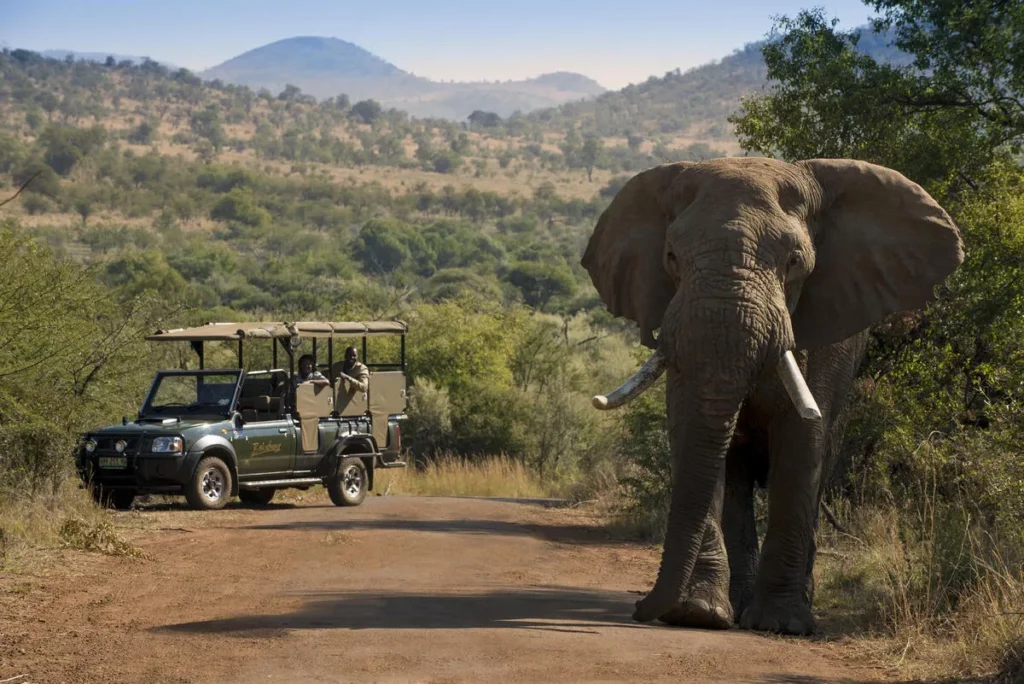
- Elephant: A large resident population — regularly seen at the waterholes flanking Lake Mankwe and along the Tlou Loop.
- Rhino: White rhino are seen consistently on open grasslands; black rhino are shyer and tend toward thicker bush, but patient observers are rewarded.
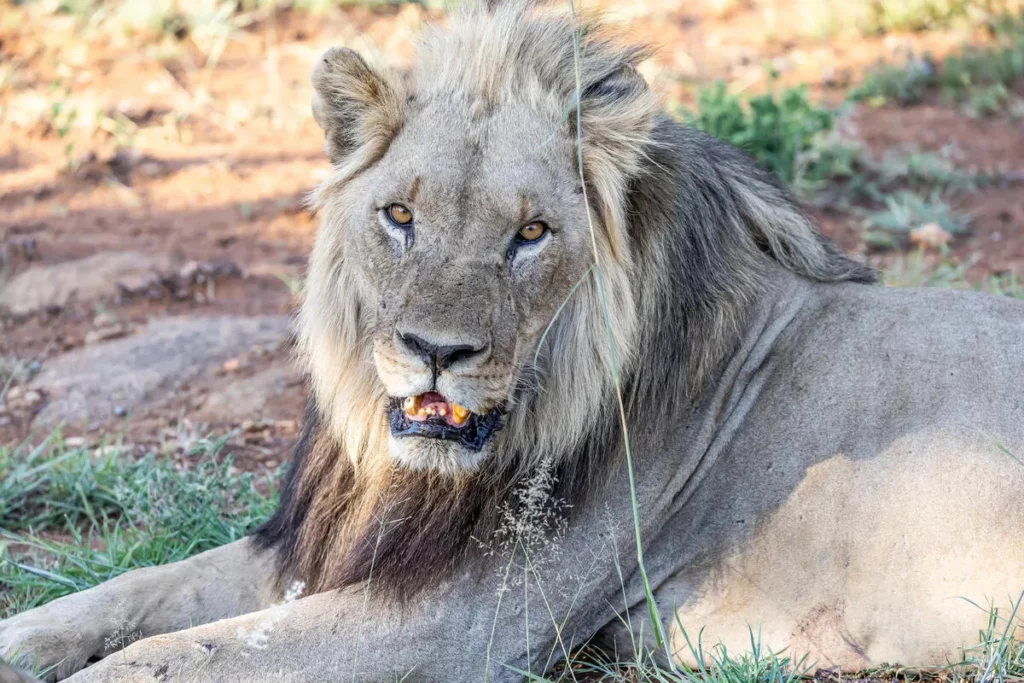
- Lion: Multiple prides roam the reserve. Early morning game drives around the Kgama-Kgama Loop and the Ruighoek areas are productive.
- Leopard: Present but elusive, as elsewhere in southern Africa — look in rocky terrain and along drainage lines at dawn and dusk.
- Cheetah: Pilanesberg has a resident cheetah population, which is relatively unusual — open grassland habitat suits them well.
- African Wild Dog: Sightings are irregular but possible — a pack has historically used the northern sections of the park.
- Hippo and Crocodile: Lake Mankwe holds permanent hippo pods; crocodiles bask on the shoreline year-round.
- Birdlife: Over 360 species recorded. The lake and its fringes attract kingfishers, fish eagles, herons, storks, and waterfowl; raptors including martial eagle and bateleur patrol the ridgelines.
The alkaline ring geology creates a transition zone between the dry Kalahari thornveld to the west and the lusher Lowveld biome to the east — which is part of why species diversity here is so high relative to the park’s footprint.
Is Pilanesberg Malaria-Free?
Yes — Pilanesberg National Park is entirely malaria-free. This is one of its most important practical advantages over the Greater Kruger reserves (Sabi Sands, Timbavati, and Kruger National Park itself), which carry low but real malaria risk and typically require antimalarial prophylaxis. In Pilanesberg, no prophylaxis is needed.
For families travelling with young children, pregnant women, travellers on medications that interact with antimalarials, or anyone who prefers to avoid preventive drugs, this makes Pilanesberg a compelling alternative to malarial Big Five destinations. The same malaria-free advantage applies to Madikwe Game Reserve (also in the North West Province) and to the Eastern Cape’s private reserves such as Amakhala and Shamwari.
Pilanesberg’s climate is subtropical highland: warm summers (October–March, up to 35°C), cooler and very dry winters (April–September). The best game viewing is typically in the dry winter months, when vegetation thins and animals concentrate at water sources — but the malaria-free status means the rainy summer season is equally safe and has its own appeal (lush greenery, newborn animals, excellent birdwatching).
How Was Pilanesberg National Park Created?
Pilanesberg’s origins are one of southern Africa’s most remarkable conservation stories. Prior to 1979, the land was used for subsistence farming and cattle grazing — wildlife had been absent for generations. In that year, the North West Parks Board launched Operation Genesis, which over several years relocated more than 6,000 individual animals from over 25 species into the reserve. This included founding populations of elephant, lion, white and black rhino, buffalo, leopard, giraffe, zebra, wildebeest, and numerous antelope species.
The scale of the translocation was extraordinary. Helicopter-darting, road transport, and temporary boma-holding facilities were used across the region. The elephant herd alone required careful management — young bulls separated from family herds during translocation later developed behavioural problems, which led to pioneering research into elephant social structure and the introduction of older bulls as mentors, a technique now used in wildlife management worldwide.
The geological setting — the Pilanesberg alkaline ring complex — made the area especially suitable. The ring structure, formed by volcanic eruptions 1.3 billion years ago, creates a natural bowl of varied terrain: rocky ridges, open grasslands, dense bushwillow thickets, and the central Lake Mankwe (mankwe means “place of the leopard” in Setswana). This diversity of habitats allowed a correspondingly diverse range of species to establish successfully.
Today the park is fully self-sustaining. Predator-prey dynamics operate naturally, and population management — including translocation out of Pilanesberg to stock other reserves — has become a conservation export.
When Is the Best Time to Visit Pilanesberg?
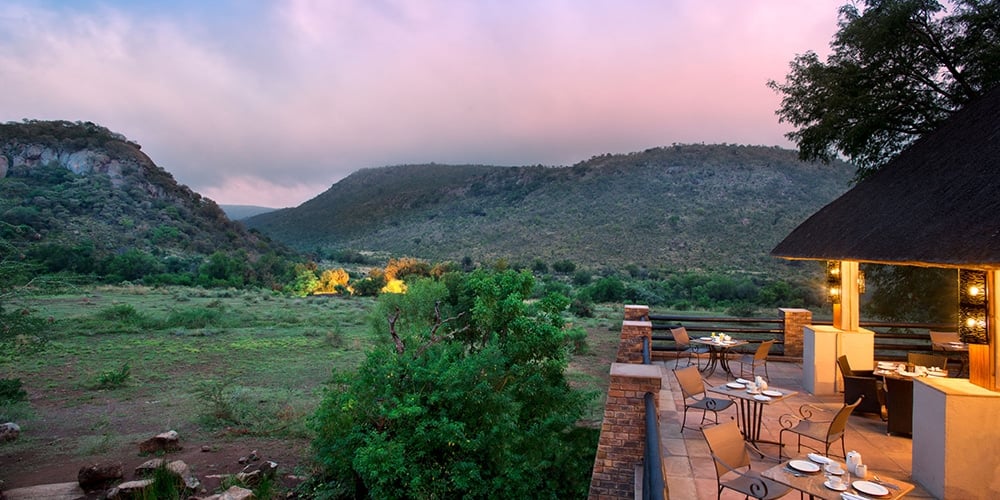
Pilanesberg can be visited year-round, and being malaria-free removes any health-related seasonal consideration. That said, the two seasons offer very different experiences, and the best timing depends on what you prioritise.
Dry Season (May–September) — Best for Game Viewing
The dry winter months are widely considered the peak game-viewing season. Vegetation drops dramatically, sightlines open up, and animals concentrate at permanent water sources — particularly Lake Mankwe and the network of waterholes distributed across the reserve. Temperatures are mild to cool (5–22°C), and there is almost no rainfall. This is the easiest time to spot lion, leopard, rhino, and elephant at close range.
Green Season (October–April) — Best for Birdwatching and Newborns
Summer rains transform the park: it greens quickly, pans fill with water, and dispersed game becomes harder to find among the dense foliage. However, this season has its own rewards. Migrant bird species arrive from October onward, swelling the species count and filling the reserve with colour and song. Newborn animals — impala lambs, zebra foals, wildebeest calves — appear from November through January. Accommodation rates are typically lower, and the reserve is quieter.
October is a transitional sweet spot: the first rains arrive to lift summer heat, game is still concentrated from the dry season, and migrant birds begin to appear.
What Are the Best Game Drives and Self-Drive Routes in Pilanesberg?
Pilanesberg is one of South Africa’s best self-drive safari parks. The road network is extensive — over 200 km of gravel and tar roads — and well-signposted, with good surfaces accessible in a standard 2WD vehicle. Game drive maps are available at the entrance gates. Guided drives are also available through lodges inside the park and from concession operators at the main camps.
Productive areas and routes include:
- Lake Mankwe and Mankwe Hide: The central lake is the park’s most reliable wildlife concentration point. The waterhole hide at Mankwe offers a stationary, silent vantage point — one of the best Big Five photography positions in the park. A boardwalk extends over the water’s edge, and hippos, crocodiles, and large elephant herds are almost guaranteed.
- Tlou Loop (north of the lake): Elephant and buffalo country — good for large herds, especially in the early morning.
- Kgama-Kgama Loop: Open grassland terrain favoured by lion, cheetah, and white rhino. A popular sunrise drive route.
- Ruighoek area (north-east): Denser bush; productive for leopard and black rhino — patience required.
- Dithabaneng and Lenong viewing points: Elevated hilltop vantage points offering sweeping views across the ring complex — good for spotting animals across large distances.
Gates open at sunrise and close at sunset — no night driving is permitted in self-drive vehicles. Guided night drives are available through some lodges and offer a very different perspective: nocturnal animals including porcupine, aardvark, civets, and brown hyena become active after dark.
Where to Stay in Pilanesberg National Park
Accommodation in Pilanesberg spans a broad spectrum — from the Sun City resort complex on the southern boundary to luxury private lodges inside the park and affordable self-catering camps. The choice of where to stay significantly shapes the experience.
Luxury Lodges Inside the Park
Bakubung Bush Lodge and Kwa Maritane Bush Lodge are the two flagship lodges built into the park’s boundaries, both offering guided safari activities, swimming pools, and the convenience of falling asleep with elephants at the waterhole. Ivory Tree Game Lodge is a smaller, more exclusive option in the north-west of the park, particularly good for family safaris given its child-friendly programme. Shepherd’s Tree Game Lodge rounds out the upper tier — adults-only, with an emphasis on quiet, intimate safari experiences.
Sun City — Resort and Safari Combination
The Sun City resort, adjacent to the park’s southern boundary, offers another base. The Palace of the Lost City is the landmark luxury property; Cascades, The Cabanas, and The Soho round out the hotel range. Guests staying at Sun City can book day and morning game drives into Pilanesberg through the resort’s activities desk. It’s a legitimate combination — particularly appealing if a group includes non-safari travellers who want resort amenities alongside the wildlife experience.
North West Parks Board Camps
Manyane Resort (main gate camp) and Bakgatla Camp offer self-catering chalets and campsites inside or adjacent to the park — cost-effective options for self-drive travellers or those wanting an overnight stay without luxury pricing.
How Does Pilanesberg Compare to Kruger National Park?
The two parks are frequently compared because both offer Big Five, both are within driving distance of Johannesburg, and both are in the public sector. In practice, they offer quite different experiences.
| Factor | Pilanesberg | Kruger (and private reserves) |
|---|---|---|
| Size | 55,000 ha | 1.96 million ha |
| Malaria | Malaria-free | Low risk — prophylaxis recommended |
| Distance from Joburg | ~2 hours | 4–6 hours (or 1 hr by flight) |
| Big Five | ✅ (incl. black rhino) | ✅ |
| Cheetah | ✅ Resident | Limited (reintroduced in some concessions) |
| Self-drive | ✅ Excellent road network | ✅ (Kruger public); ❌ (private reserves) |
| Guided drives | Available via lodges and concessions | Yes — core offer in private reserves |
| Night drives | Via lodges only | Available in select Kruger camps; private reserves standard |
| Leopard sightings | Possible; less reliable | Sabi Sands: world-class; Kruger public: possible |
| Crowd levels | Busy weekends; quiet weekdays | Varies; private reserves exclusive |
| Trip length needed | 1–3 nights (day-trip possible) | 3–7+ nights for full experience |
For travellers who want Big Five in the shortest possible time, without malaria risk, within two hours of Johannesburg, Pilanesberg wins on pure logistics. For those willing to invest more time — and wanting the deepest, most exclusive wildlife experience in southern Africa — the private reserves bordering Kruger (Sabi Sands, Timbavati) remain in a different category for leopard, wild dog, and off-road game viewing.
Practical Information for Planning Your Pilanesberg Safari
- Location: North West Province, South Africa. GPS: 25°15’S, 27°04’E.
- Nearest city: Rustenburg (~50 km); Johannesburg (~160 km / ~2 hours).
- Nearest airport: OR Tambo International (Johannesburg) — no internal flight required.
- Park gate hours: Open from 05:30 (summer) / 06:00 (winter); close at 19:30 (summer) / 18:00 (winter). Times vary by season — confirm on arrival.
- Conservation fees: Charged at the gate; fees vary by residency and season.
- Vehicle requirements: 2WD is adequate on main roads. High-clearance recommended for some gravel loops but not essential.
- Speed limit inside the park: 40 km/h on gravel roads; 60 km/h on tar.
- No bush walks permitted: Self-drive and guided game drives only — walking safaris are not available in Pilanesberg.
- Mobile reception: Available across most of the park (MTN, Vodacom).
- Combined trip tip: Pilanesberg pairs naturally with a day at Sun City, the Cradle of Humankind (UNESCO) or Johannesburg city; it works as a 1–3 night add-on to any South African itinerary.
Frequently Asked Questions About Pilanesberg National Park
Is Pilanesberg National Park worth visiting?
Yes — Pilanesberg is one of the best-value and most accessible Big Five destinations in South Africa. It offers the full Big Five (including both white and black rhino), cheetah, over 360 bird species, and excellent self-drive infrastructure, all within two hours of Johannesburg and entirely malaria-free. It is particularly well suited to first-time safari visitors, families, and travellers on shorter itineraries.
Can you see the Big Five in Pilanesberg?
Yes. All Big Five species — lion, leopard, elephant, rhino, and buffalo — are resident in Pilanesberg. The park also holds both white rhino and black rhino, which is uncommon. Lion and elephant are seen regularly; leopard requires patience and luck, as in any reserve.
Is Pilanesberg National Park malaria-free?
Yes, Pilanesberg is completely malaria-free. No antimalarial prophylaxis is required. This makes it one of South Africa’s top safari choices for families with young children, pregnant travellers, and anyone who prefers to avoid malaria medication.
How long do you need for a Pilanesberg safari?
A minimum of two full days (two nights) is recommended to give yourself a reasonable chance of covering the main areas and seeing the Big Five. One night is possible as a short introduction; three nights allows a relaxed pace with morning and afternoon drives on multiple days. Day trips from Johannesburg are possible but leave little margin for unhurried wildlife encounters.
What is the best time of year to visit Pilanesberg?
The dry season (May–September) offers the best game viewing: sparse vegetation, animals concentrated at waterholes, cool temperatures, and clear skies. June and July are the peak game-viewing months. The green season (October–April) is excellent for birdwatching and newborn animals, and the park is quieter with lower accommodation rates.
Can you self-drive in Pilanesberg?
Yes — Pilanesberg has an excellent self-drive road network of over 200 km of well-maintained roads, accessible in a standard 2WD vehicle. Good game-drive maps are available at the gates. Guided drives are also available through lodges and operators inside the park, including night drives not accessible to self-drivers.
How does Pilanesberg compare to Madikwe Game Reserve?
Both are malaria-free Big Five reserves in the North West Province within driving distance of Johannesburg. Madikwe (75,000 ha) is slightly larger and exclusively private — no self-drive, no public camps, and very few lodges — offering a more intimate and exclusive experience. Pilanesberg has wider accommodation options including self-catering and resort-adjacent stays, plus the Sun City combination. Madikwe has one of South Africa’s strongest African wild dog populations and is a better choice for dedicated wildlife enthusiasts seeking fewer crowds.
Are there cheetah in Pilanesberg National Park?
Yes. Pilanesberg has a resident cheetah population, which is relatively uncommon in South African reserves of this size. The open grassland habitat in parts of the park suits cheetah well. Sightings are not guaranteed but are consistent enough that cheetah is regularly reported by visitors, particularly in the Kgama-Kgama Loop grasslands.
What was Operation Genesis?
Operation Genesis (1979) was the wildlife translocation programme that established Pilanesberg as a game reserve. Over several years, more than 6,000 animals from over 25 species were relocated into the park from other parts of southern Africa. It was one of the largest wildlife translocations ever undertaken and transformed the former farmland into one of South Africa’s premier national parks. The lessons learned — particularly around elephant social behaviour — influenced wildlife management practice globally.
Plan Your Pilanesberg Safari
Pilanesberg National Park delivers an accessible, malaria-free Big Five experience that can be built into almost any South African itinerary without extended travel time. Whether you’re planning a standalone safari, a resort-and-game-drive combination with Sun City, or looking for the right introduction to African wildlife, the park punches well above its weight. African Safari Group, a specialist luxury safari operator, can arrange bespoke guided safari itineraries to Pilanesberg and the surrounding region. Enquire now to start planning your visit.